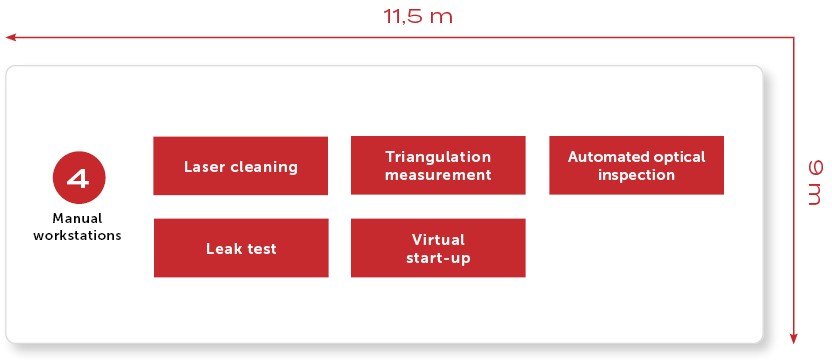
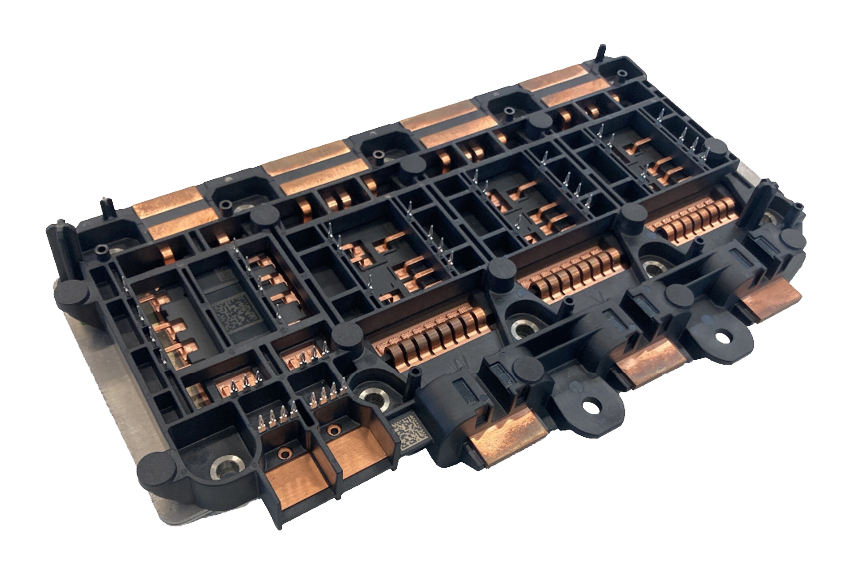
Prototypes for power modules are assembled on this semi-automated STIWA production line. These are used in inverters, which convert the direct current (DC) from the battery into alternating current (AC) for the electric motor.
The assembly process begins with manual loading of components onto workpiece carriers. After cleaning by laser and precise positioning, the parts are joined together by soldering. This is followed by another cleaning and processing at the ultrasonic welding station. The finished power module is finally subjected to camera and leak testing and assembled at the packaging station.
RISK-FREE SIMULATION OF MACHINE PROCESSES
Before physical assembly, the functionality of the system is verified using a digital twin. All automated sequences, manual operations, complex data management, special procedures, and communication with external systems are simulated and tested. Acceptance is conducted in an agile manner at defined milestones directly with the customer.