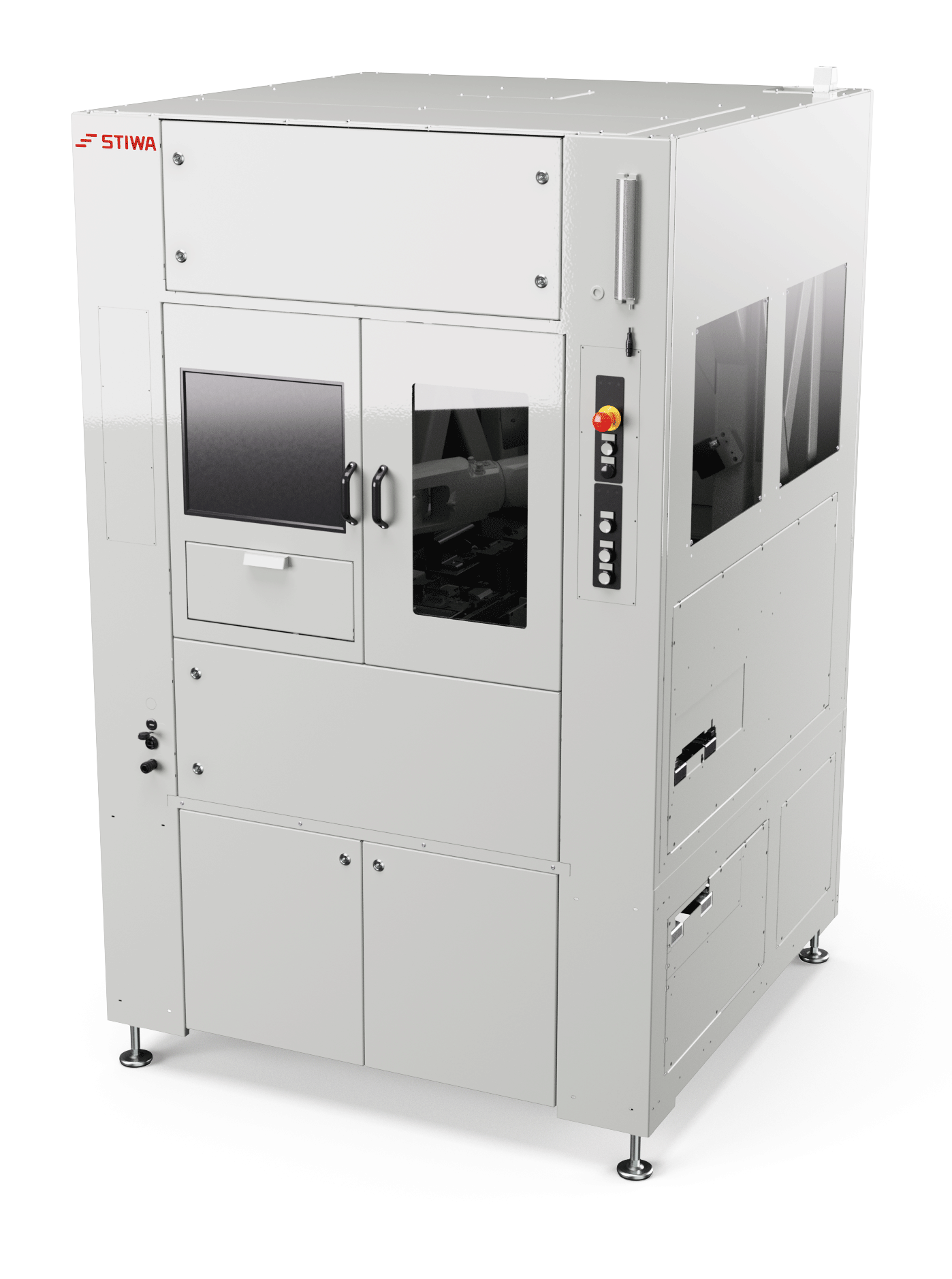
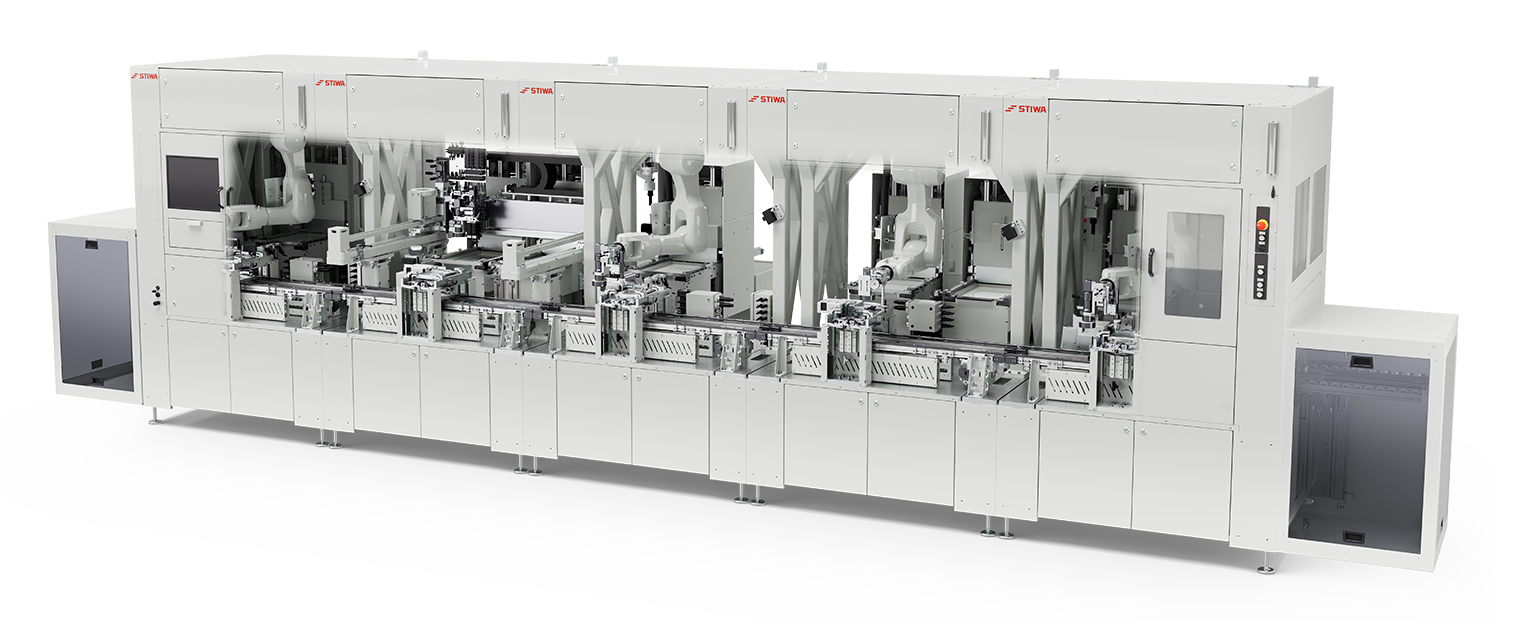
With the STIWA Cell, you can
quickly bring your ideas to market.
This standardized, modular production unit is the result of our deep understanding of modern manufacturing requirements that combines agility, precision and our proven STIWA quality promise. It enables you to work with actual required processes during the prototype phase and thus decisively minimize system errors, risks and costs. Start your automation with flexibility and sound economics – the STIWA Cell grows with your requirements.

Pre-assembled standardization
The modular design allows you to quickly configure your cell, instead of months of project running time, you will receive a finished cell in the shortest possible time.
Fast entry into production
Test and optimize your products and processes at an early stage under actual automated conditions – for a smooth transition into production.

Flexible modular system
Configure your cell from a library of functional hardware and systems – from semi-automatic to fully automated systems. The cell is designed for a wide range of product sizes, from small parts to very large components.
Seamless expansion
Cells can be connected and aligned with flexibility to be replaced, removed or more cells added, allowing your production line to be customized per your needs. The cells can be combined with all additional components of the STIWA modular system (feeders, transport systems, etc.).
Cleanroom competence
Depending on the requirements, the STIWA cells can also be designed for cleanroom classes A–D or ISO 5–9. For strict clean room requirements special attention is paid and the cell is designed with required materials such as stainless steel, passivated metals or conforming polymers and to particle prevention or product contamination.

Easy to use
The cell is designed so that changes and adjustments can be made directly by the production staff.
Constant process quality
By automating core processes such as riveting, welding, greasing or gluing etc., the effort for manual work is reduced and process stability is increased.
Process monitoring and software
The entire process monitoring and software required is integrated from the start, helping avoid system breakdowns in later phases.

Lower investment
Ideal for smaller "test machines" with 3-5 processes instead of investing immediately in a large project. Enables prototyping and initial sample production at a fraction of the cost
Early optimization
Using the actual processes in the prototype phase minimizes risk and potential barriers to mass production.


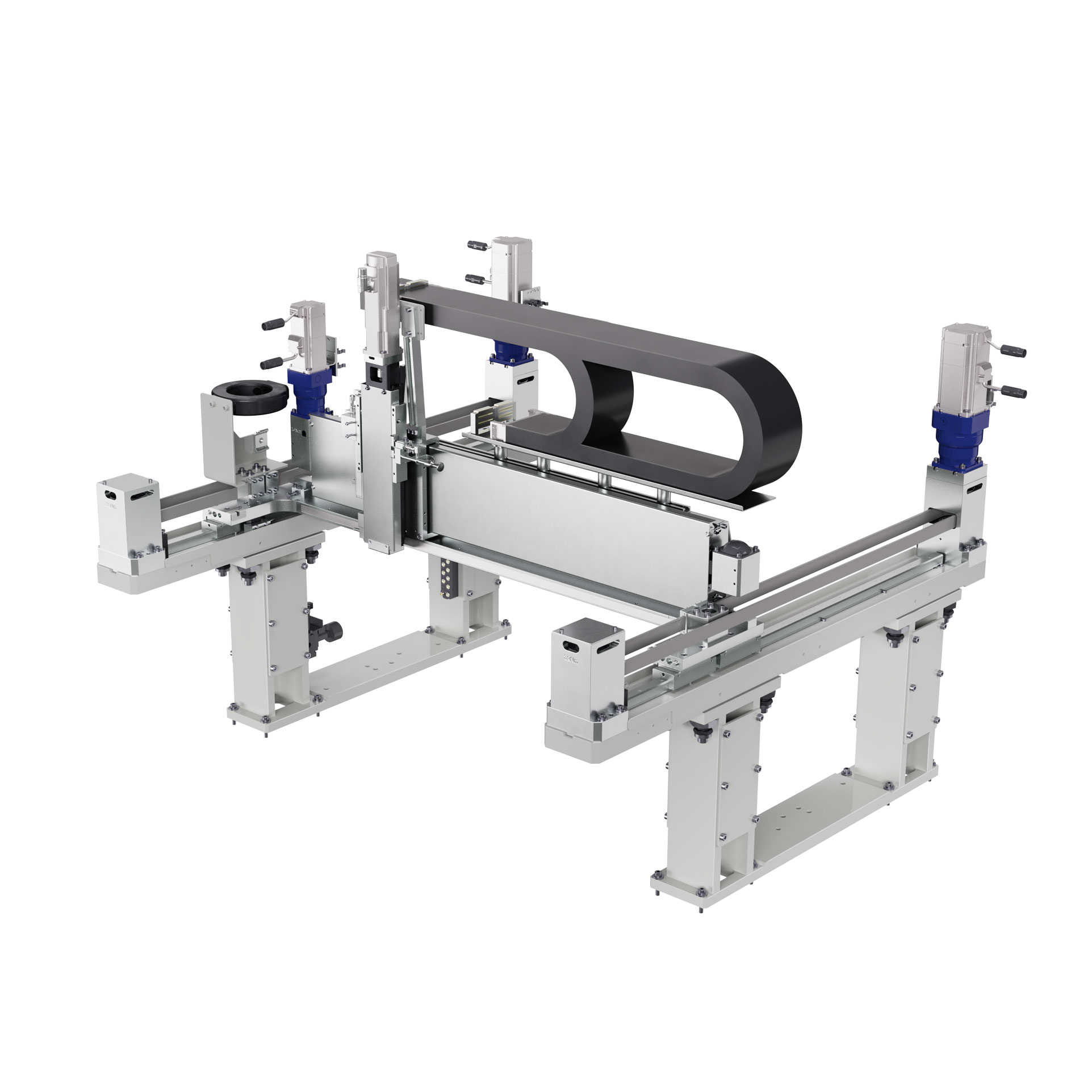
Gantry
The Gantry is a handling system with three linear axes that precisely positions or processes components in all three spatial directions.
Depending on the task, it can be equipped with different EOATs (end-of-arm tools) such as grippers, screwdrivers or dispensing systems, making it flexible for a wide range of handling and process tasks.
If required, a second axis system can be added to the base structure to increase throughput or distribute tasks. The unit is supplied as a Plug & Play package and can be easily integrated into any STIWA cell.
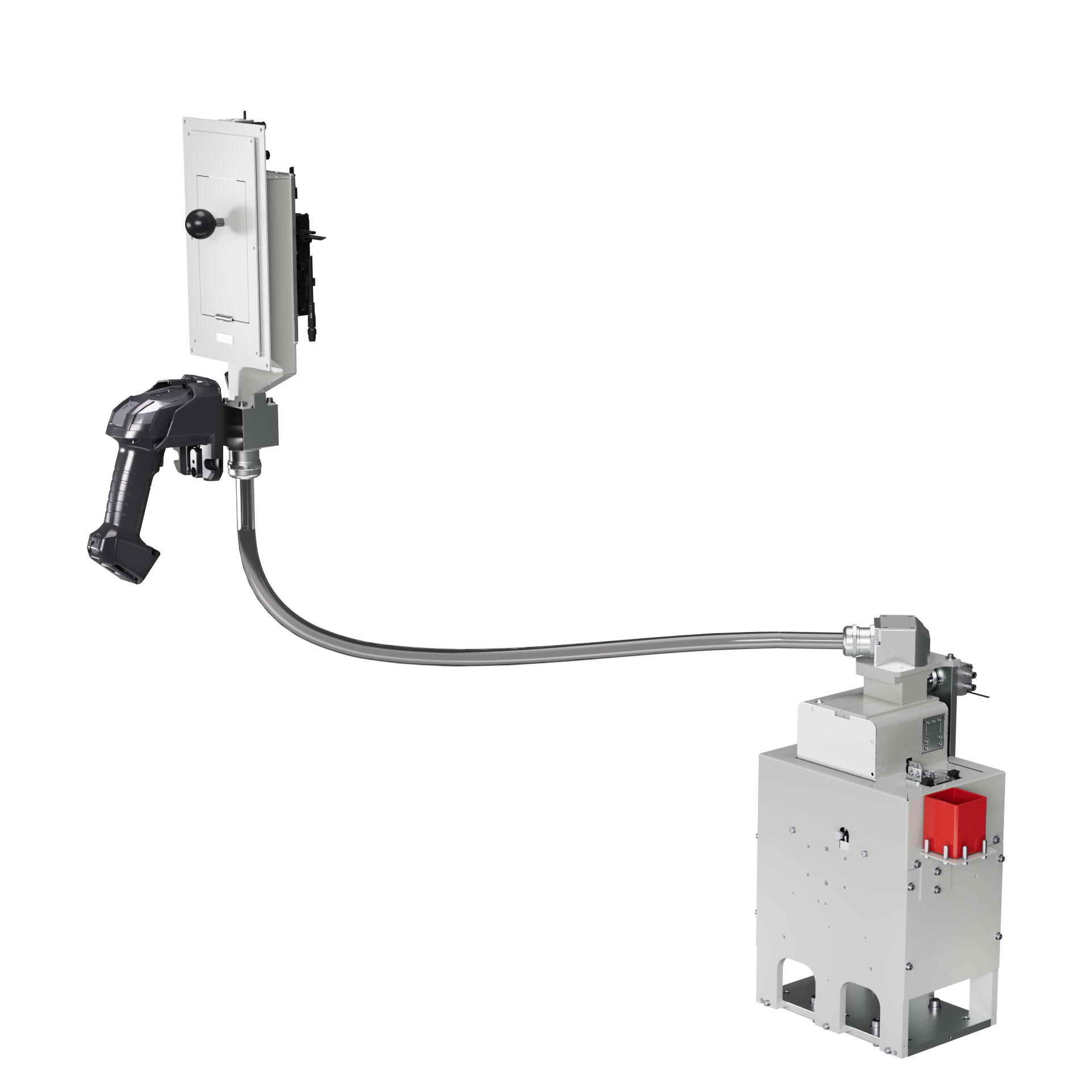
Screw Feeder
The Screw Feeder reliably supplies the assembly cell with screws.
The screws are filled in as bulk material via a lock chamber in the machine protection – optionally only after a successful scan of the product data, so that the correct screws are always used.
The unit then singulates the screws and provides them for the next process step. As a Plug & Play solution with all necessary components, the Screw Feeder can be quickly integrated into any STIWA cell.
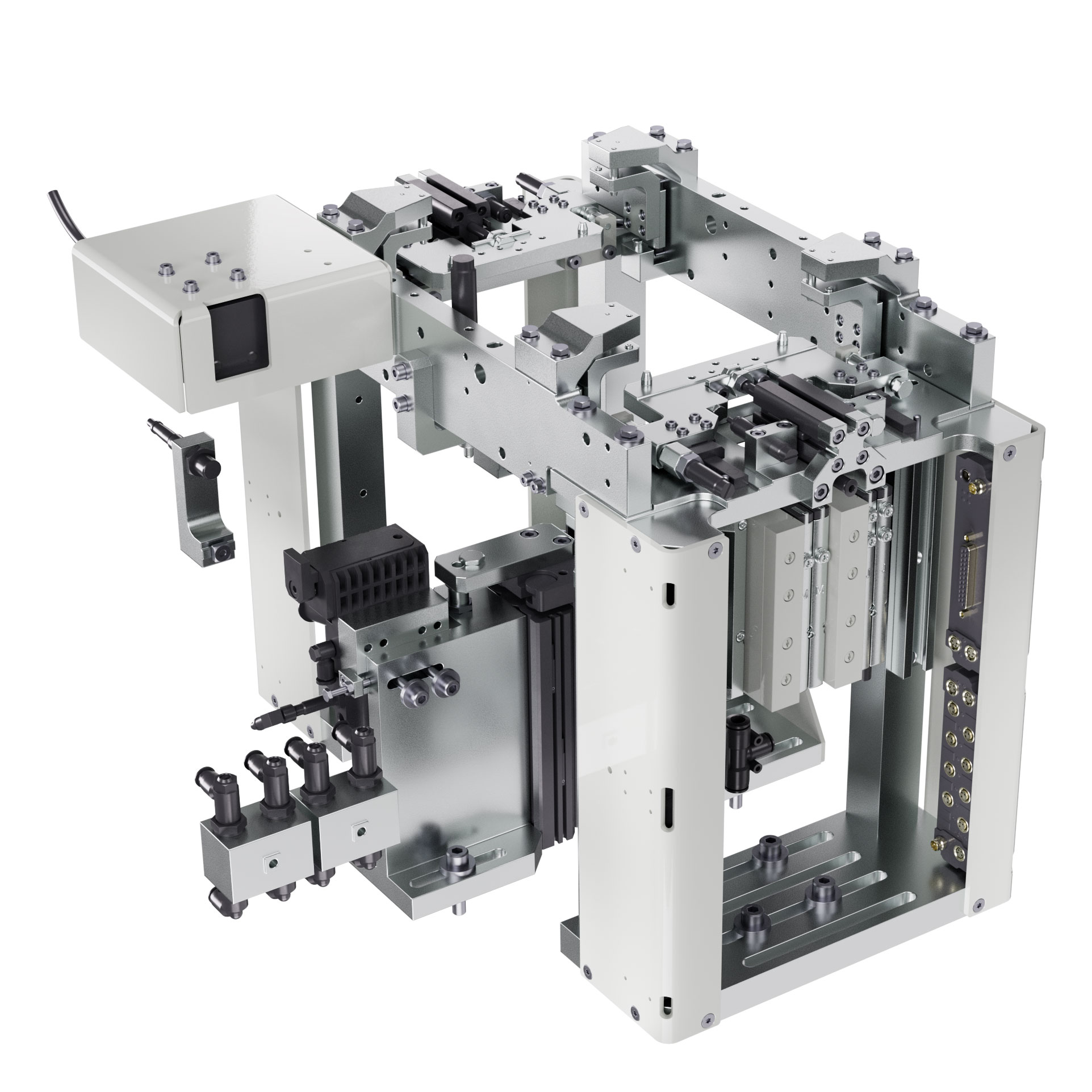
Flow-Through-Jacking Modul
The Flow Through Jacking Module lifts products or the workpiece carrier off the conveyor system, centers them and clamps them securely.
This creates a stable, repeatable position for the subsequent process. The module can be adapted to the product and scaled in size.
If several jacking units are used for one cell, the workpiece carrier setup time can be compensated and the cycle time reduced. The unit is supplied as a Plug & Play package and can be easily integrated into any STIWA cell.
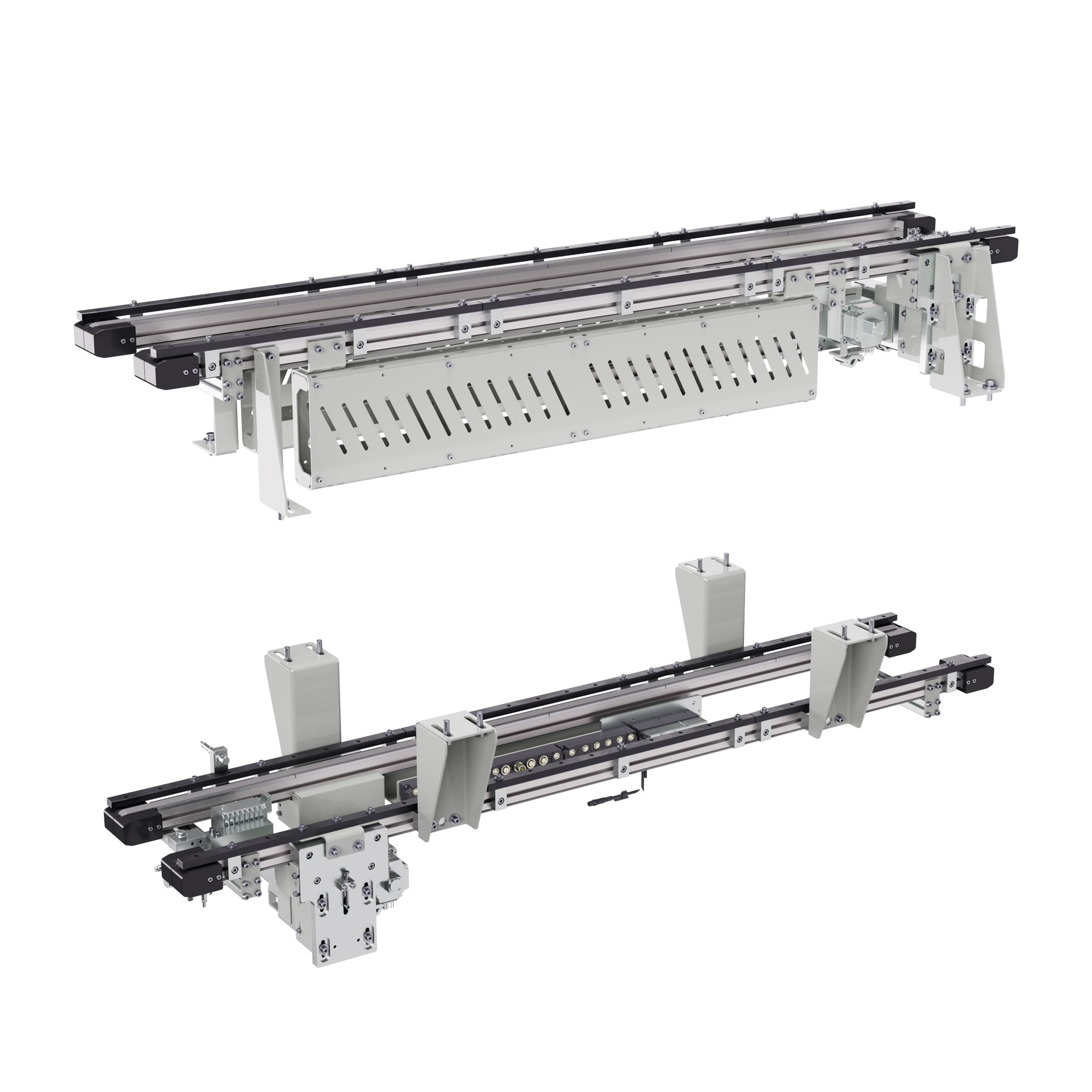
Belt Conveyor
The Belt Conveyor reliably transports products or workpiece carriers through the system.
The Belt Conveyor reliably transports products or workpiece carriers through the system. It consists of an upper conveyor belt and a return belt, which can either be arranged below the processing belt or run in a loop format.
Height, belt spacing and speed can be adapted to the respective application. As a Plug & Play unit with all necessary components, it can be quickly integrated into any STIWA cell.
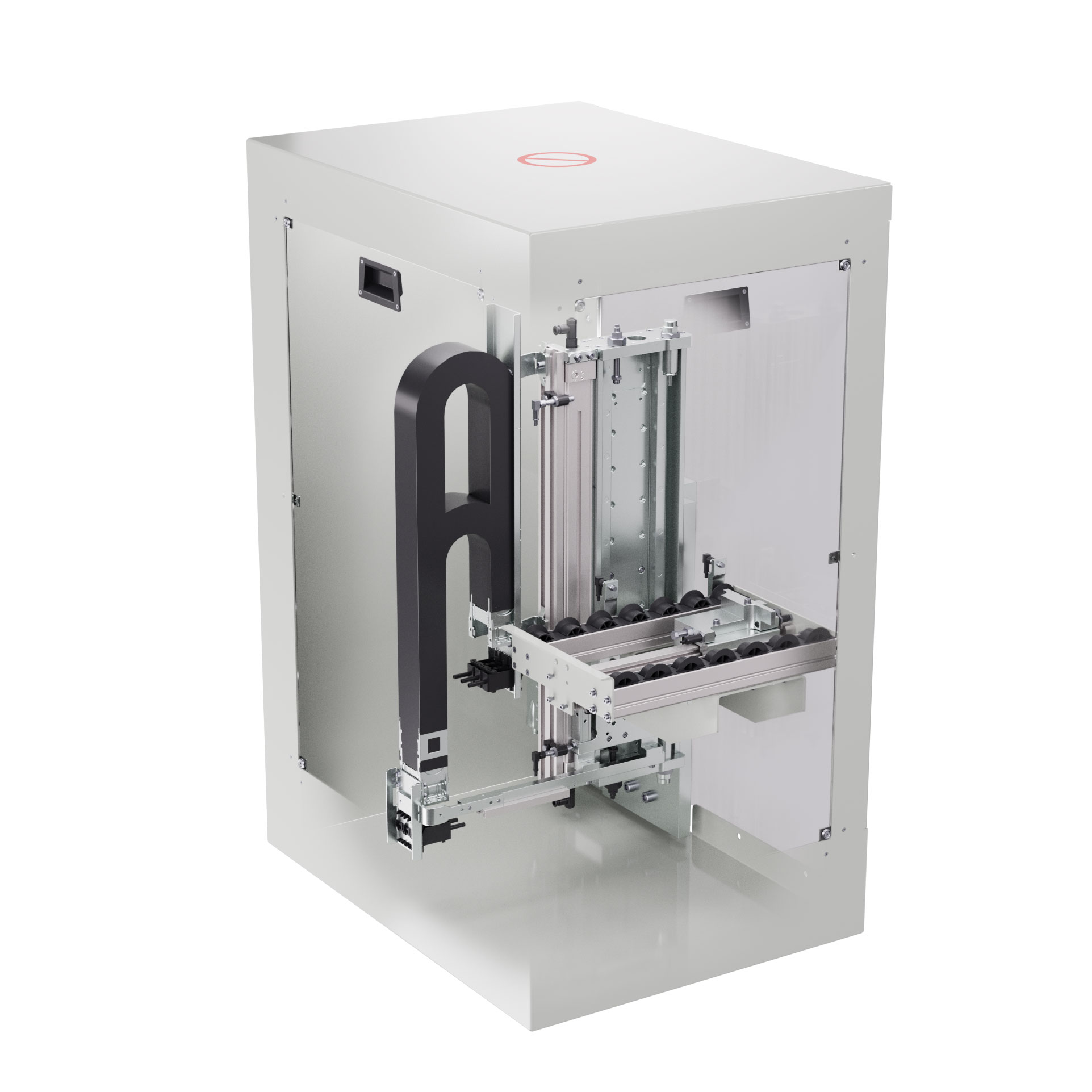
Lift Unit
The Lift Unit vertically connects the return level and the transport level and transfers workpiece carriers between the two conveyor levels.
Empty workpiece carriers are brought up from the return line, reloaded and sent back into the process. This creates a continuous material flow – connected to automated cells as well as to manual workstations.
The unit can be adapted to the size and weight of the workpiece carriers and is supplied as a Plug & Play solution with all required components.
Ready, to make your production agile and efficient?
Talk to our experts about the STIWA Cell and discover how you can speed up your innovation processes and ensure the highest quality at the same time. Contact us today!